Rietveld Schröder House: Masterpiece of Modern Architecture and De Stijl Movement
The Rietveld Schröder House, located in Utrecht, Netherlands, is one of the most iconic examples of the De Stijl movement and a groundbreaking architectural achievement of the early 20th century. Designed by Dutch architect Gerrit Rietveld in 1924 for Truus Schröder-Schräder, this house broke away from traditional design norms by embracing abstraction, geometry, and flexibility. It remains a UNESCO World Heritage Site and continues to inspire architects, designers, and art lovers worldwide.
The building not only embodies the aesthetic philosophy of De Stijl, focusing on primary colors, lines, and planes, but also represents a radical departure from the conventional concept of domestic living. Its movable walls, open floor plan, and seamless connection between interior and exterior spaces were decades ahead of their time.
Historical Background of the House
The Rietveld Schröder House was commissioned by Truus Schröder-Schräder, a strong advocate of progressive lifestyles. As a widow with children, she desired a home that was open, flexible, and free from the rigid conventions of bourgeois living. Rietveld, a furniture designer turned architect, translated these ideas into a bold architectural experiment.
Constructed in 1924, the house marked a milestone in architectural history by translating the artistic principles of the De Stijl movement into a livable environment. Unlike traditional houses, it rejected ornamentation and symmetry, focusing instead on spatial freedom and abstract design.
Architectural Philosophy Behind the Design
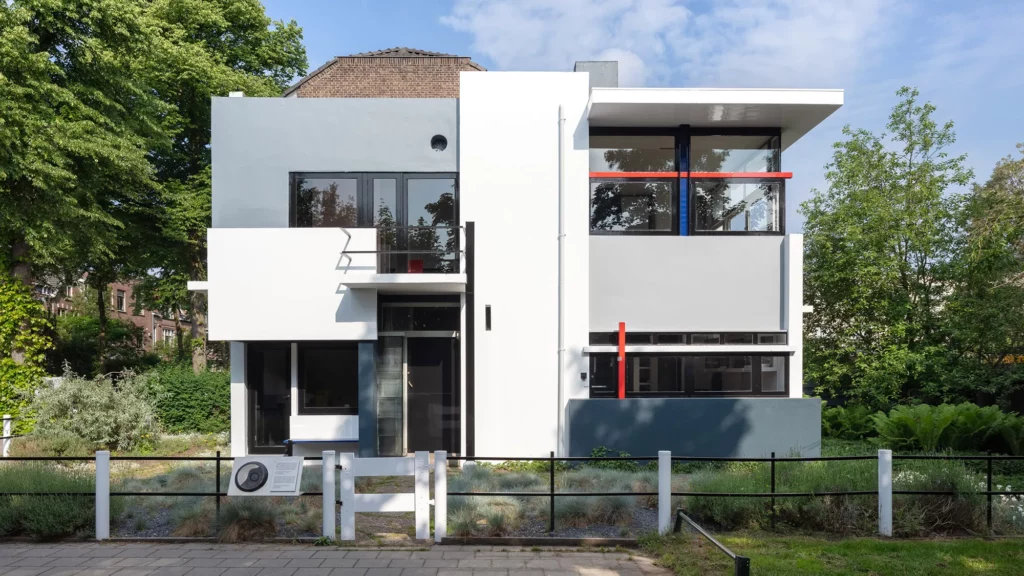
The architectural philosophy of the Rietveld Schröder House stems from the principles of De Stijl, an art movement founded in 1917 by Theo van Doesburg and Piet Mondrian. This movement emphasized harmony and order, achieved through abstraction, straight lines, and the use of primary colors along with black, white, and gray.
Rietveld translated these ideas into architecture by creating a building that looks like a three-dimensional composition of geometric planes. Each element—walls, windows, doors, and balconies—was treated as an independent component, yet integrated into a harmonious whole. The result is a building that appears both dynamic and balanced, with no clear distinction between inside and outside.
Interior Design and Movable Walls
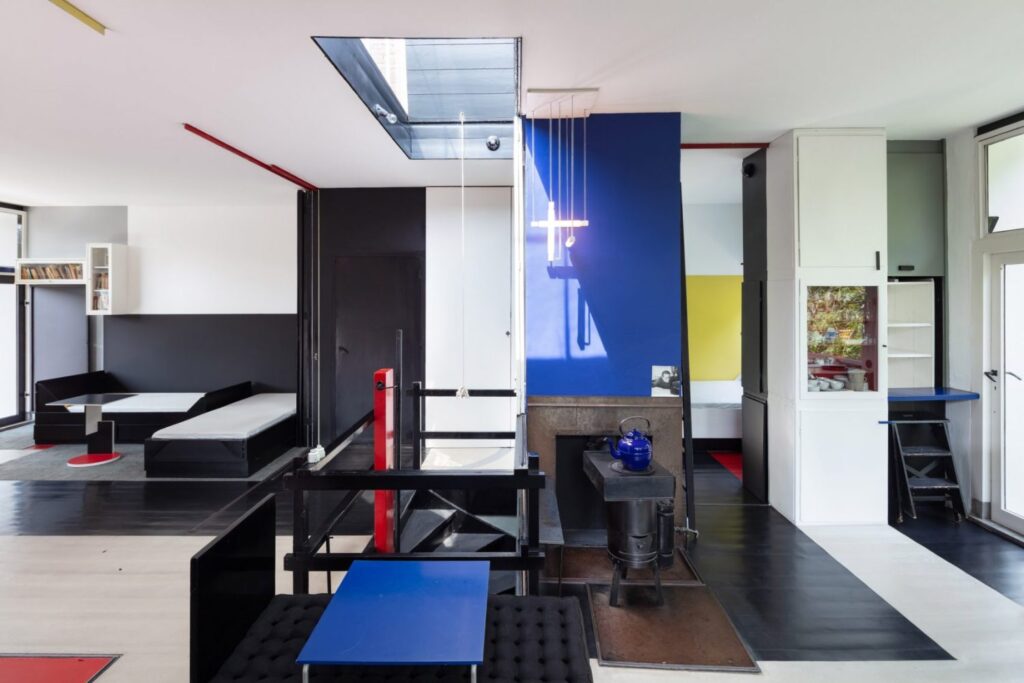
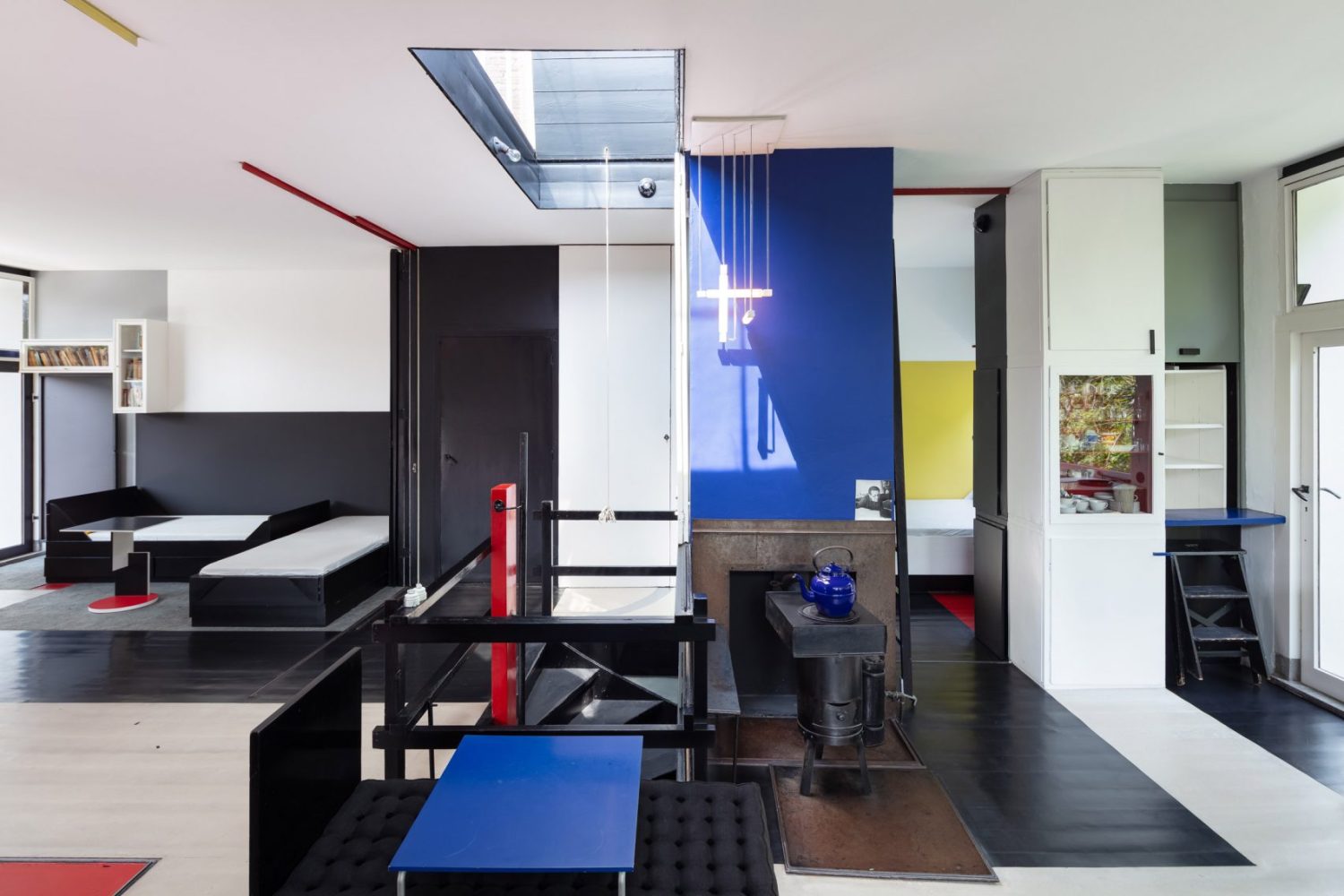
Inside the house, the most revolutionary feature is the use of movable walls and sliding panels. This design allowed residents to adapt the space to their needs, opening it into one large room or dividing it into smaller, private areas. For example, the upper floor could transform from a large open space during the day into multiple bedrooms at night.
The flexibility of the interior design was not just practical but also ideological, reflecting Truus Schröder’s desire for a modern, liberated lifestyle. The minimal furniture, geometric forms, and color-coded planes all reinforced the philosophy of simplicity and abstraction.
Role of Color and Geometry in the House
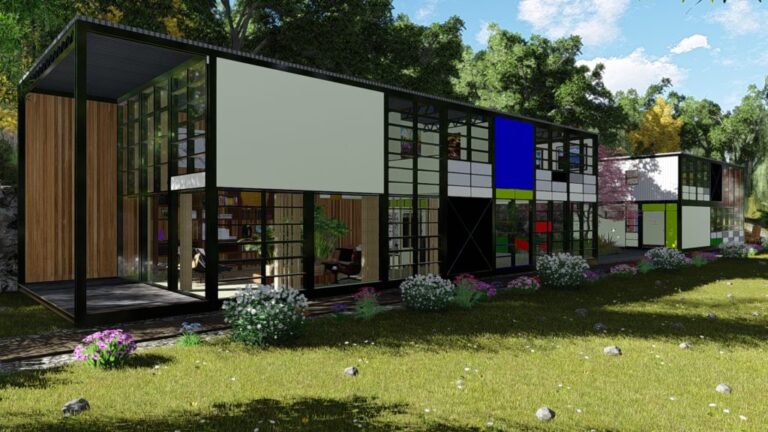
Color plays a crucial role in defining the Rietveld Schröder House. True to the De Stijl movement, the design employs a palette of primary colors (red, blue, and yellow) along with black, white, and gray. Instead of being decorative, colors were used to emphasize structural elements and create a sense of visual order.
Geometry also dominates the building’s design. Every plane, beam, and frame aligns with the principles of abstraction. The building itself feels like a Mondrian painting brought to life, where lines intersect and overlap, creating a fluid yet structured environment.
Real-World Examples and Inspirations
Rietveld Red and Blue Chair
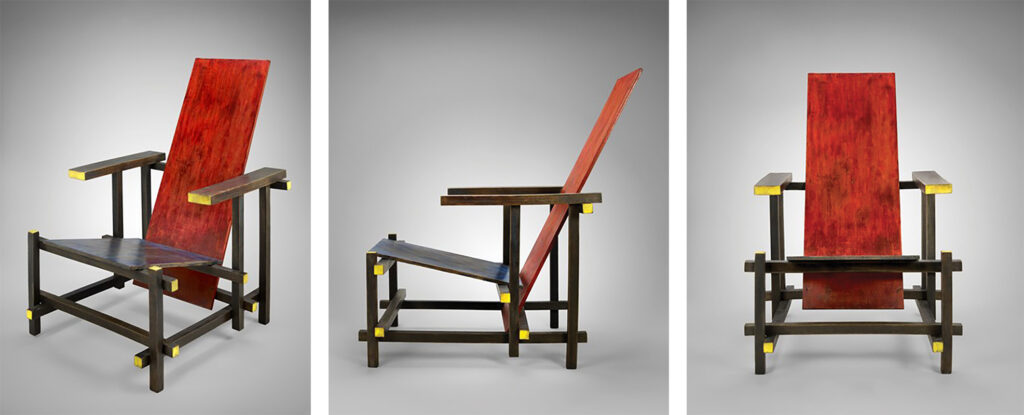
The Red and Blue Chair, designed by Gerrit Rietveld in 1917, serves as a precursor to the Rietveld Schröder House. The chair embodies the same De Stijl principles—primary colors, straight lines, and geometric abstraction. Its presence in the house reflects the continuity between Rietveld’s furniture and architectural experiments. The chair was not just a functional object but a sculptural element that seamlessly fit into the abstract environment of the house.
Schröder’s Personal Living Experience
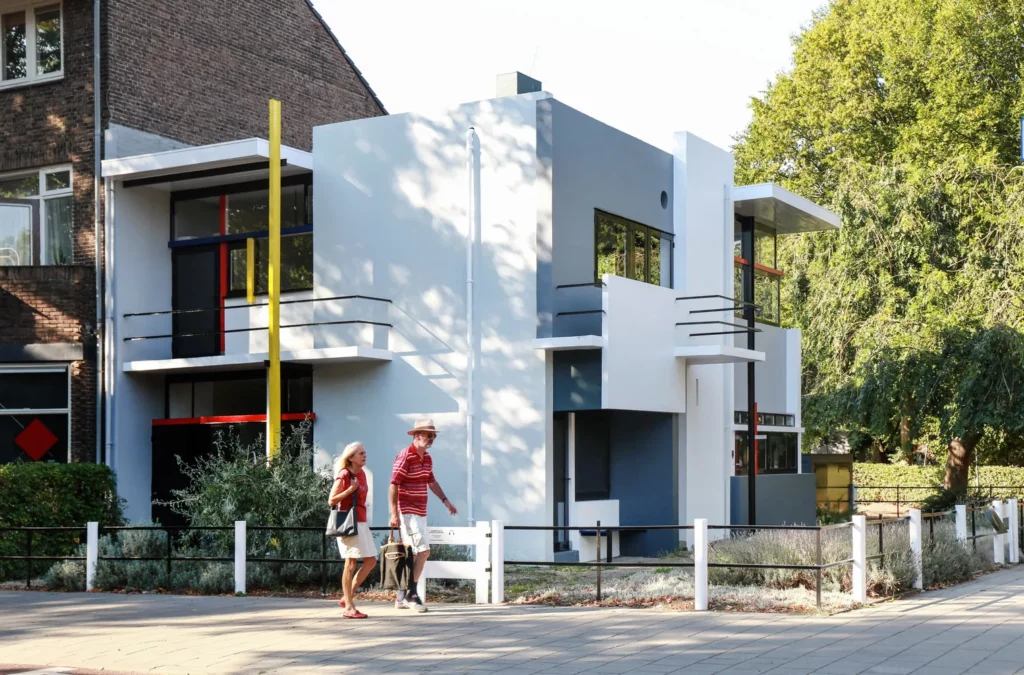
Truus Schröder lived in the house until she died in 1985, demonstrating the house’s practicality despite its unconventional design. For decades, she used the adaptable space as both a home and a symbol of her progressive ideals. Her lifestyle within the house served as proof that the architecture was not only visionary but also livable.
UNESCO World Heritage Recognition
In 2000, UNESCO declared the Rietveld Schröder House a World Heritage Site, acknowledging its significance as a masterpiece of human creative genius. This recognition places the house alongside global landmarks, confirming its importance in the evolution of modern architecture.
Influence on Modern Architecture
The house has influenced countless architects, from modernists like Le Corbusier to contemporary designers exploring modularity and abstraction. The idea of open-plan living, once radical, is now a standard feature in modern homes and offices. The house remains a touchstone for architectural education and inspiration worldwide.
Benefits of the Design and Technological Innovations
The Rietveld Schröder House was ahead of its time, offering numerous benefits:
- Flexible Living Spaces: The movable partitions allowed for dynamic reconfiguration of rooms, a feature now widely used in modern architecture.
- Integration of Art and Architecture: The house blurred the boundaries between painting, sculpture, and construction, creating a holistic environment.
- Connection with the Environment: Large windows and open spaces created a seamless relationship between indoors and outdoors, promoting natural light and ventilation.
- Minimalist Living: By stripping away ornamentation, the house encouraged simplicity and focus on essential elements of design and life.
Use Cases and Real-Life Applications
The concepts behind the Rietveld Schröder House continue to solve real-life problems today. For urban environments where space is limited, the idea of movable walls and adaptable rooms provides efficient solutions for modern apartments. Similarly, open-plan designs inspired by the house foster collaboration in offices and creativity in studios.
For families, the flexibility of spaces helps adjust to evolving needs, such as transforming a home office into a bedroom or a playroom into a study area. The house demonstrates how architecture can adapt to changing lifestyles rather than forcing people into rigid spaces.
FAQs
1. Why is the Rietveld Schröder House so important in architecture?
The house is considered a milestone in modern architecture because it translates abstract artistic principles of De Stijl into a functional living environment. It introduced ideas such as open-plan design, movable walls, and integration of art and architecture.
2. Can visitors tour the Rietveld Schröder House today?
Yes, the house is open to the public as a museum in Utrecht, Netherlands. Visitors can experience its unique design firsthand, including the adaptable interiors and iconic furniture pieces.
3. How did the house influence modern homes and offices?
The concepts of open-plan living, minimalism, and flexibility pioneered in the house have become central to contemporary architecture. From small apartments to corporate offices, these design principles continue to shape how we build and inhabit spaces.