Rietveld Schröder: Masterpiece of Modern Architecture and De Stijl Movement
The Rietveld Schröder House, often simply referred to as Rietveld Schröder, stands as one of the most remarkable works of early modern architecture. Designed in 1924 by Dutch architect Gerrit Rietveld in collaboration with Truus Schröder-Schräder, this house embodies the principles of the De Stijl movement, where geometry, abstraction, and functionality come together in perfect harmony.
What makes Rietveld Schröder exceptional is not only its bold visual statement but also its forward-thinking adaptability, reflecting a lifestyle that was years ahead of its time. It is a UNESCO World Heritage Site today, admired for its contribution to the development of 20th-century architecture.
The Historical Context of Rietveld Schröder
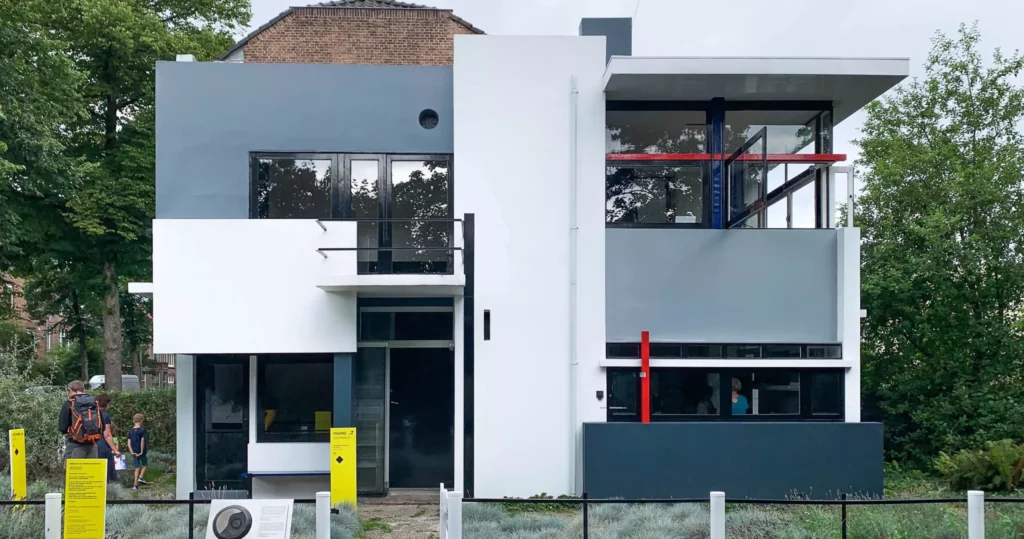
The early 20th century marked a turning point in design philosophy, where traditional ornamentation gave way to clean lines and rational structures. Gerrit Rietveld, a leading figure in the De Stijl movement alongside Piet Mondrian, aimed to translate abstract art into real living spaces.
Truus Schröder, the client and co-designer, was equally influential. A progressive widow, she envisioned a home that would foster independence, creativity, and openness for her family. Together, Rietveld and Schröder developed a residence that was both radical and practical. Their design challenged societal norms, breaking away from compartmentalized homes to embrace openness and adaptability.
Architectural Features of Rietveld Schröder
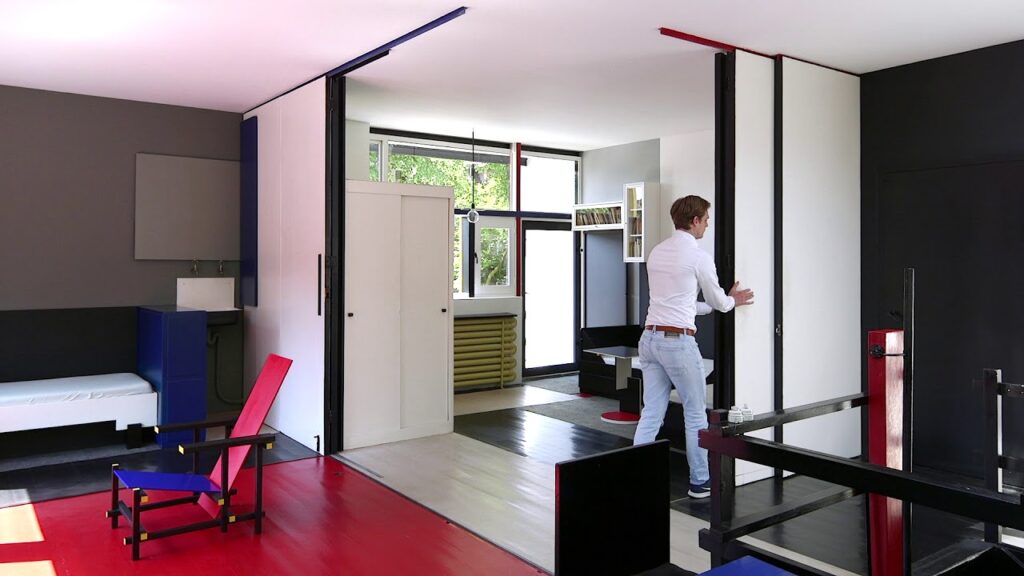
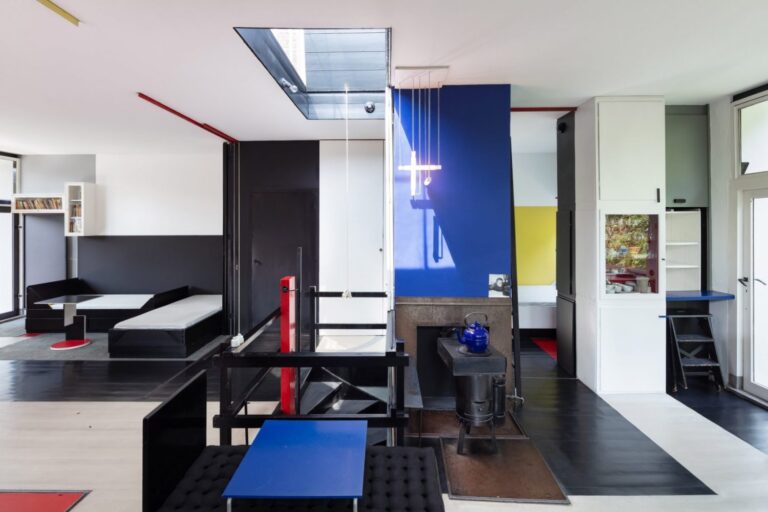
The house is characterized by its dynamic spatial layout. One of the most revolutionary elements is the use of sliding panels and movable walls on the upper floor, allowing spaces to transform according to the family’s needs. Rooms could easily be reconfigured, blurring the boundaries between private and communal areas.
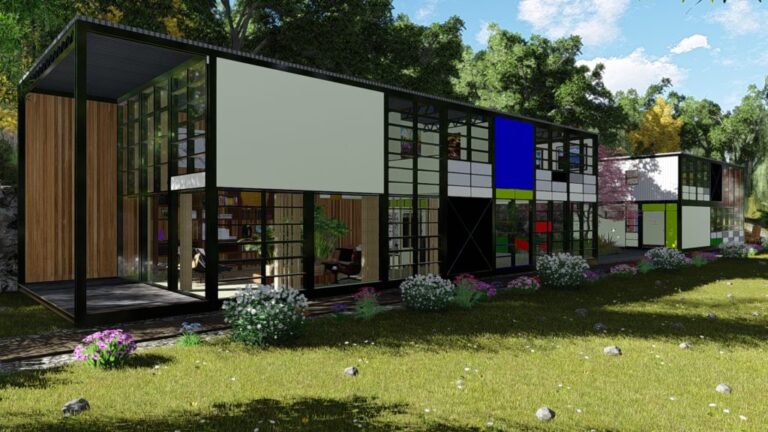
Externally, the house is a three-dimensional expression of De Stijl’s abstract art. The bold use of horizontal and vertical lines, planes, and color blocks red, yellow, blue, black, and white creates a striking visual identity. The structure was not only an aesthetic marvel but also a philosophical statement: living space as a form of art.
The Role of Technology in Rietveld Schröder’s Design
Although built in the 1920s, Rietveld Schröder integrated what we now recognize as modern technological innovations. The sliding partitions were an early precursor to flexible design solutions found in contemporary smart homes.
Ventilation and natural light optimization were central to the design. The extensive use of windows, many of which could pivot or open in unconventional ways, ensured maximum daylight and airflow. This feature anticipates today’s sustainable building practices that prioritize natural energy efficiency.
The application of prefabricated elements, simple geometric construction, and modularity also demonstrates technological foresight. These ideas have influenced modern minimalist architecture, where adaptability and energy-conscious design dominate.
Real-World Examples of Rietveld’s Influence
Rietveld Schröder House (1924)
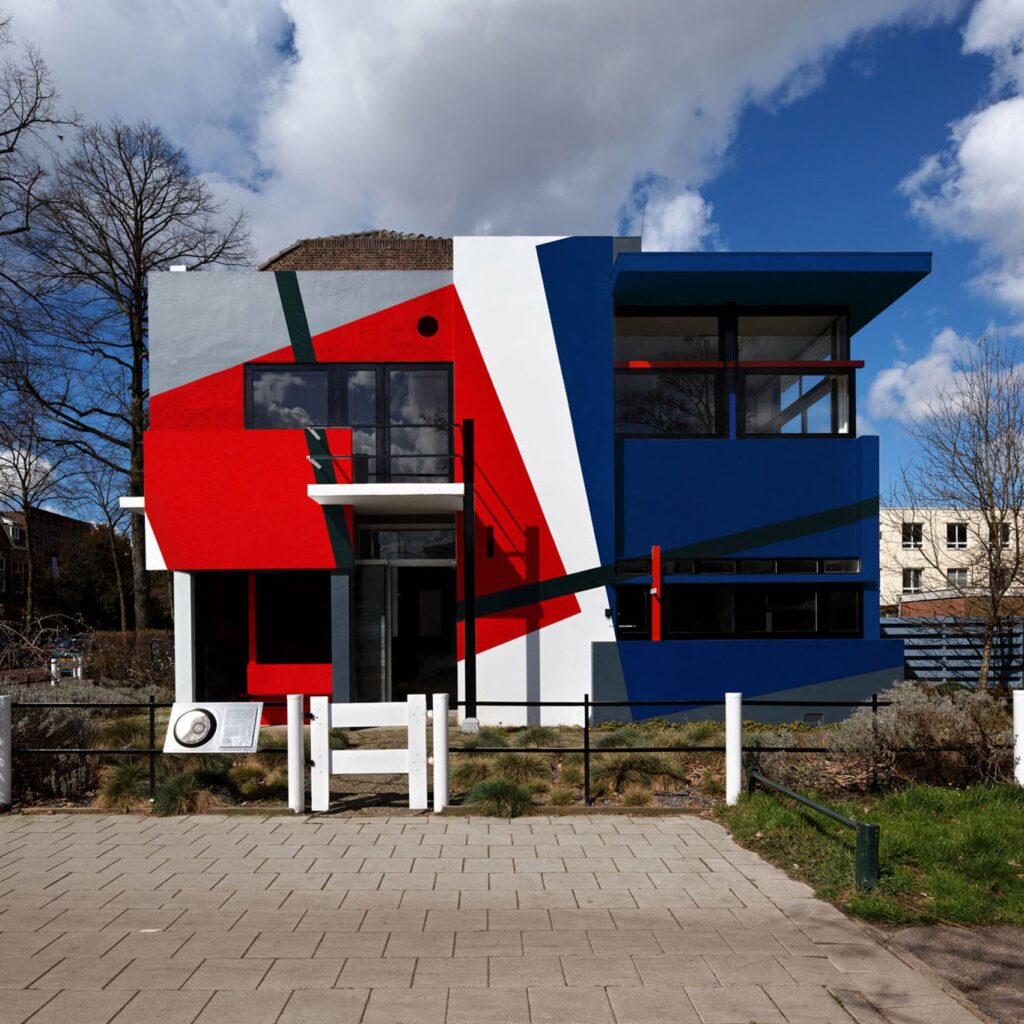
This house itself is the foremost example of Rietveld’s design philosophy. It embodies openness, flexibility, and integration of art into daily life. Beyond being a dwelling, it served as a manifesto for modern architecture. Visitors today experience how radically different it was compared to its traditional Dutch neighbors.
Its enduring relevance lies in its modular adaptability. Contemporary architects still draw inspiration from its capacity to transform spaces, proving its timelessness.
The Rietveld Chair (Red and Blue Chair)
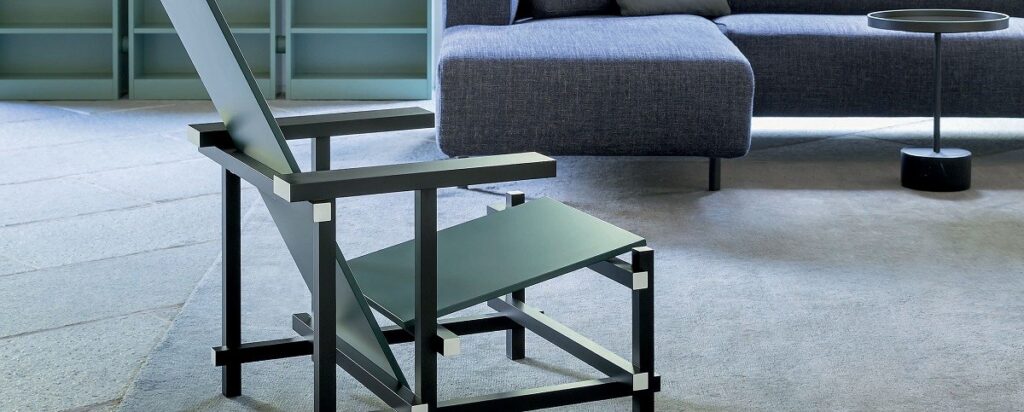
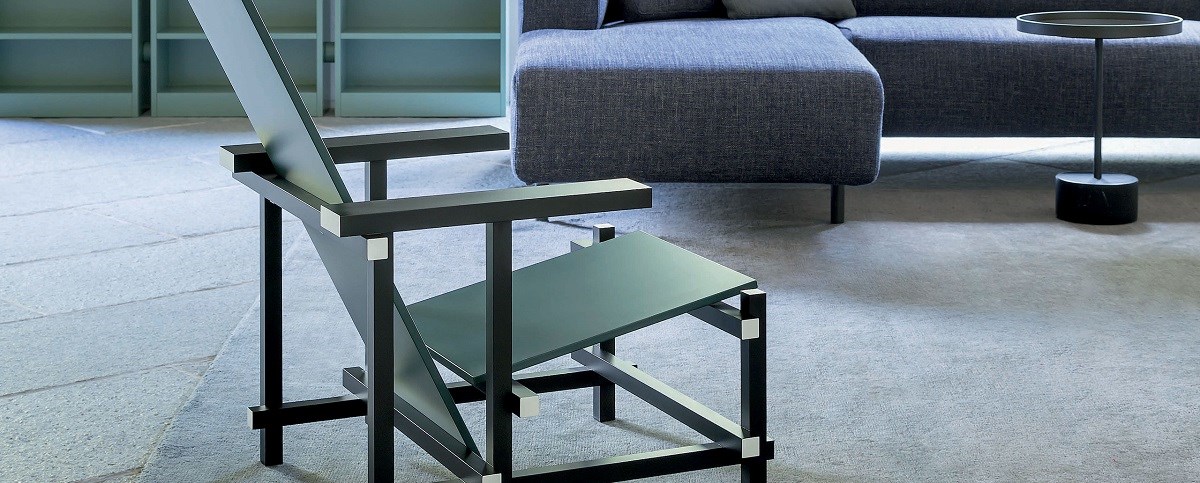
Although not part of the house itself, Rietveld’s Red and Blue Chair is a crucial example of his design ethos. The chair shares the same geometric purity and De Stijl color palette. It blurred the line between furniture and sculpture, influencing how furniture could complement architectural space.
This iconic piece shows how Rietveld’s philosophy extended from the house’s walls to its furnishings, creating a cohesive lifestyle design. Many modern minimalist furniture concepts stem from this principle of functional art.
Utrecht Housing Projects
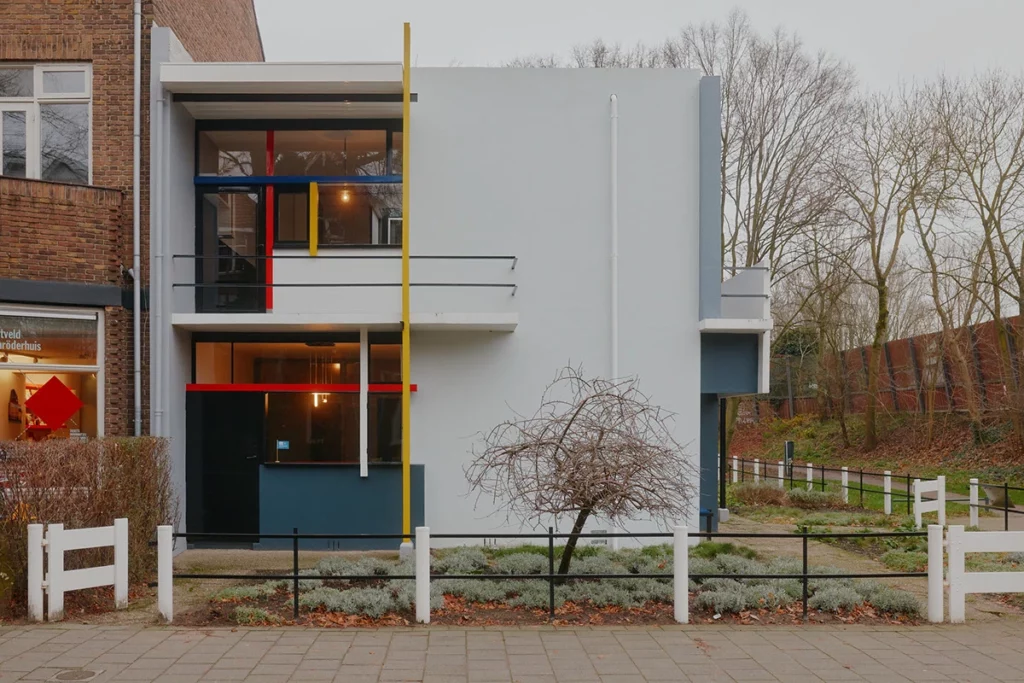
Rietveld later expanded his ideas into social housing projects in Utrecht. These developments incorporated functional simplicity, affordability, and efficient use of space values that echoed the adaptability of the Rietveld Schröder House.
While less radical than the Schröder House, these projects demonstrated the practical scalability of modernist principles. They proved that design could merge aesthetic innovation with everyday needs.
Contemporary Co-Working Spaces Inspired by Rietveld
Modern co-working hubs often incorporate flexible partitions, modular furniture, and open spaces, concepts pioneered in the Rietveld Schröder House. The influence is evident in how spaces are designed to adapt to individual or group needs, reflecting the house’s transformable living areas.
The continued use of Rietveld’s innovations shows how his vision has shaped not only residential architecture but also commercial and collaborative environments.
Benefits of Rietveld Schröder’s Architectural Approach
One of the key benefits of the Rietveld Schröder design is flexibility. The movable walls and partitions were groundbreaking in 1924 and remain relevant for modern urban living, where compact spaces need multifunctionality.
Another major benefit is the integration of art and functionality. Unlike purely decorative homes, the Schröder House exemplified how living spaces could double as artistic expressions while remaining practical. This approach enriches the human experience, turning homes into dynamic environments rather than static shelters.
Furthermore, its emphasis on natural light and airflow aligned with health and sustainability long before these became global design priorities. In a world increasingly focused on energy-efficient housing, the Rietveld Schröder House provides a blueprint for responsible architecture.
Use Cases and Practical Relevance
The Rietveld Schröder principles address several real-life challenges:
- Urban Living Constraints – In crowded cities where space is limited, modular layouts inspired by Rietveld’s movable partitions allow residents to maximize every square meter.
- Work-Life Flexibility – With the rise of remote work, homes must serve multiple functions. The Schröder philosophy of adaptability ensures seamless transitions between personal and professional life.
- Sustainable Design Goals – The house’s reliance on natural light and ventilation reduces energy consumption. These strategies remain practical for reducing carbon footprints in modern construction.
- Cultural Preservation – The house illustrates how architecture can embody cultural movements like De Stijl, preserving artistic heritage while offering practical solutions for future designs.
Frequently Asked Questions
1. Why is the Rietveld Schröder House considered revolutionary?
The house broke away from traditional closed-room structures, introducing open, flexible spaces with movable partitions. Its abstract geometry and De Stijl aesthetics made it both a functional home and a work of art, setting new standards for modern architecture.
2. How does Rietveld Schröder influence architecture today?
Contemporary architects still apply their concepts of modularity, flexibility, and integration of art into everyday life. Open-plan offices, adaptable apartments, and sustainable designs all carry echoes of Rietveld’s innovations.
3. Is the Rietveld Schröder House still relevant in modern society?
Yes, it remains highly relevant. Its principles address modern challenges such as limited urban space, multifunctional living, and sustainability. The house serves as a timeless model of innovative, adaptable design.