Notre Dame Cathedral Architecture – History, Gothic Masterpiece, and Global Influence
Notre Dame Cathedral, located in the heart of Paris, is one of the most iconic and enduring symbols of Gothic architecture. Its design not only reflects the spiritual aspirations of the Middle Ages but also the architectural ingenuity that transformed the European skyline. Constructed between the 12th and 14th centuries, this cathedral has stood as a beacon of religious devotion, artistic expression, and cultural identity for centuries.
The cathedral’s architecture is renowned for its pointed arches, ribbed vaults, flying buttresses, and stained-glass windows. These features were groundbreaking at the time of construction and have since defined the Gothic style across Europe. Even after the devastating fire of 2019, the world remains fascinated by its intricate details and the ongoing restoration that promises to preserve this masterpiece for future generations.
Historical Background of Notre Dame Cathedral
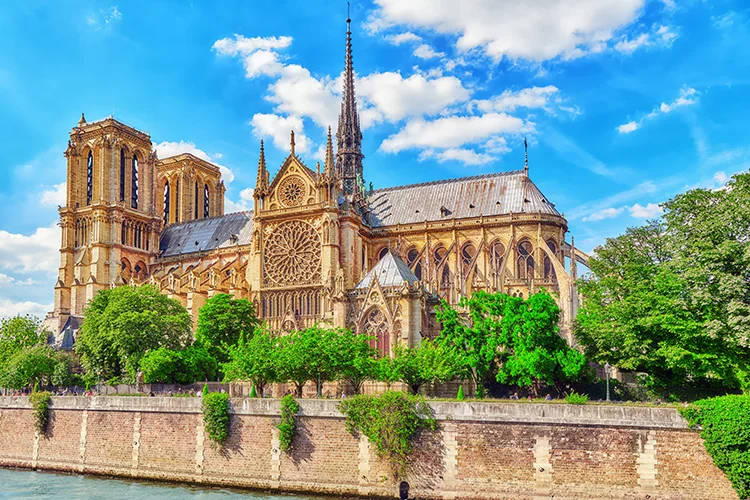
The foundation of Notre Dame Cathedral began in 1163 under Bishop Maurice de Sully and took nearly two centuries to complete. Its location on the Île de la Cité was chosen for its strategic and spiritual importance, as Paris was emerging as a center of power, learning, and culture.
The cathedral was built during a time when European society was deeply rooted in religion. Cathedrals were designed not just as places of worship, but as powerful symbols of heavenly order and earthly authority. Notre Dame quickly became the religious heart of Paris and an enduring emblem of France itself.
Key Features of Notre Dame Cathedral Architecture
Notre Dame’s Western Facade
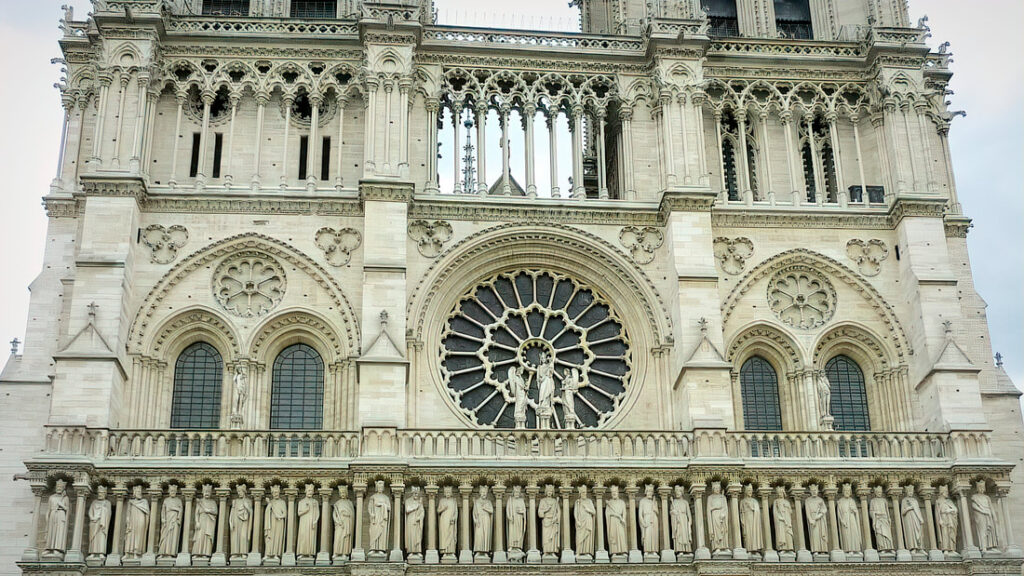
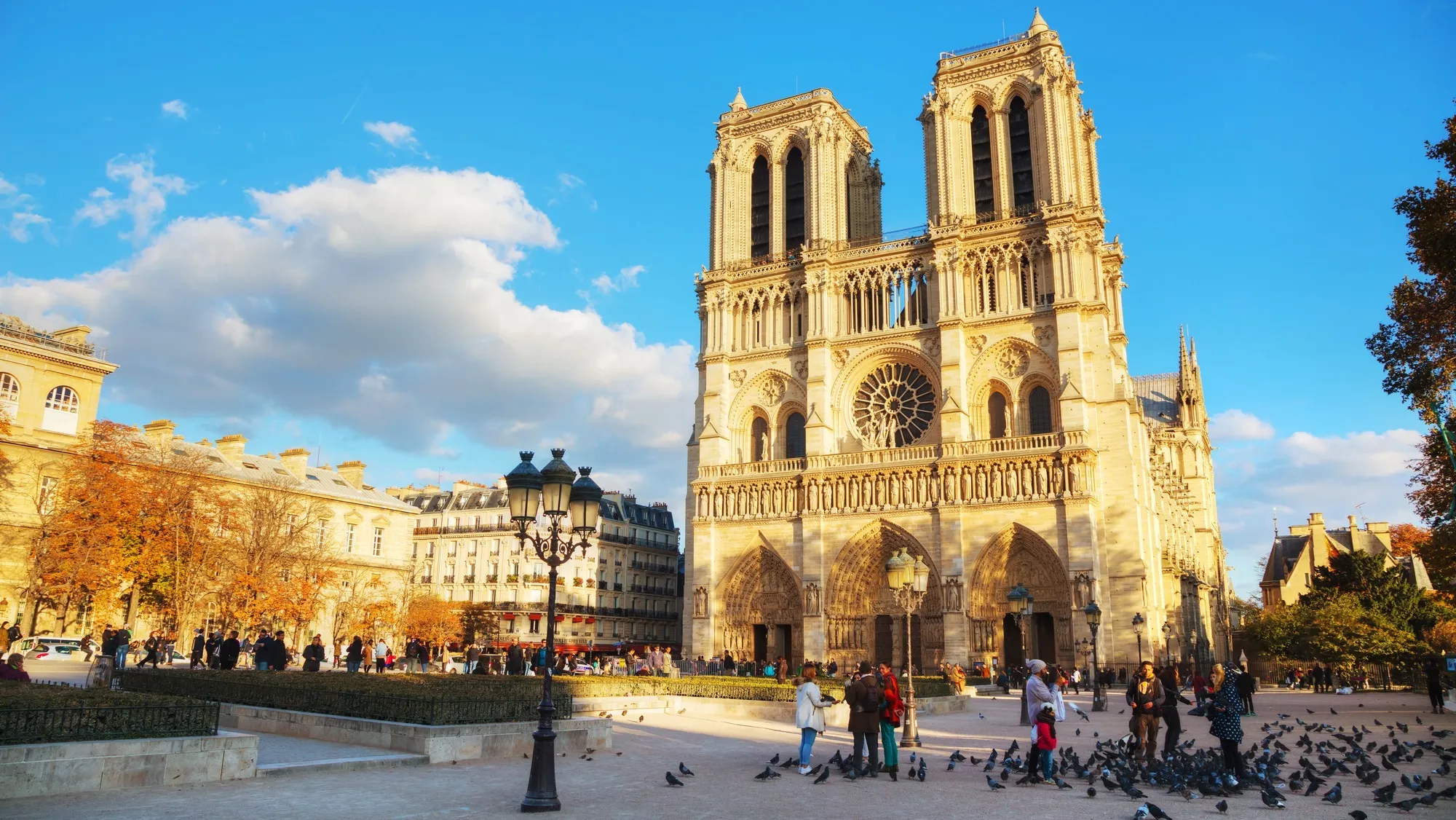
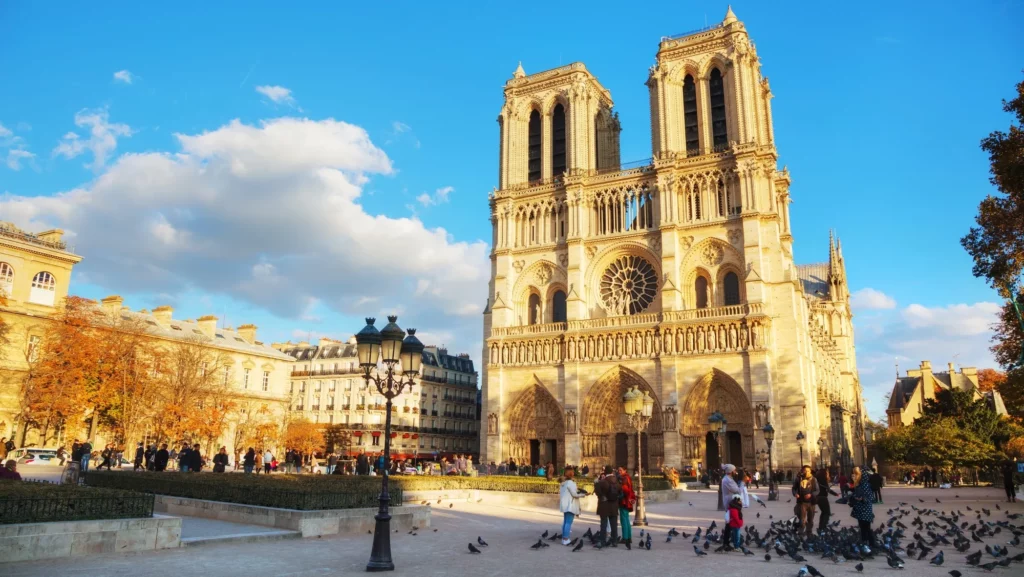
The western facade of Notre Dame is instantly recognizable, with its twin towers rising high above the Seine River. These towers, completed in the mid-13th century, exemplify the balance and grandeur of Gothic architecture. Each is adorned with sculpted figures, intricate portals, and the famous rose window that symbolizes divine light.
The facade also integrates biblical narratives into its design. Sculptures of saints, kings, and biblical figures are arranged in tiers, creating a visual sermon for the faithful. This layering of meaning was essential in an era when many worshippers were illiterate, allowing architecture itself to become a form of storytelling.
Flying Buttresses: Engineering Marvels
One of the most revolutionary features of Notre Dame Cathedral is its flying buttresses. These external supports, added in the 13th century, allowed builders to construct taller walls and larger stained-glass windows without compromising stability.
The buttresses are not only functional but also aesthetically striking. They give the cathedral an almost skeletal appearance, with graceful arcs stretching outward like wings. This design innovation became a hallmark of Gothic architecture and remains one of the most studied features of medieval engineering.
Ribbed Vaults and Pointed Arches
Inside the cathedral, ribbed vaults and pointed arches create an expansive and awe-inspiring interior. The pointed arch distributes weight more efficiently than a rounded Romanesque arch, enabling the construction of higher ceilings and wider spans.
These architectural innovations elevated the spiritual atmosphere, directing the gaze upward and filling the nave with a sense of lightness and grandeur. The ribbed vaults also contributed to structural flexibility, making it easier to cover large spaces with intricate patterns that harmonized with the verticality of the Gothic style.
Stained-Glass Windows and Rose Windows
Notre Dame’s stained-glass windows are among its most celebrated features. The most famous are the three rose windows, particularly the North Rose, which dates to the mid-13th century. These windows are masterpieces of medieval craftsmanship, depicting biblical scenes in radiant colors.
The stained glass served both a decorative and didactic purpose. In a largely illiterate society, these windows were designed as visual bibles, teaching stories of faith through imagery. Moreover, the interplay of light through the glass created a mystical atmosphere inside the cathedral, reinforcing the idea of divine illumination.
Real-World Examples of Notre Dame’s Influence
Cologne Cathedral in Germany
Cologne Cathedral is one of the most direct heirs of Notre Dame’s architectural style. Its massive spires, pointed arches, and detailed facade showcase the influence of French Gothic principles across Europe. While construction began in the 13th century, it was not completed until the 19th century, demonstrating how enduring Notre Dame’s design ideals were.
The cathedral also mirrors Notre Dame’s spiritual and cultural role, serving as a landmark of identity for the German people and a UNESCO World Heritage Site. Its resemblance to Notre Dame illustrates the transnational spread of Gothic design innovations.
Westminster Abbey in London
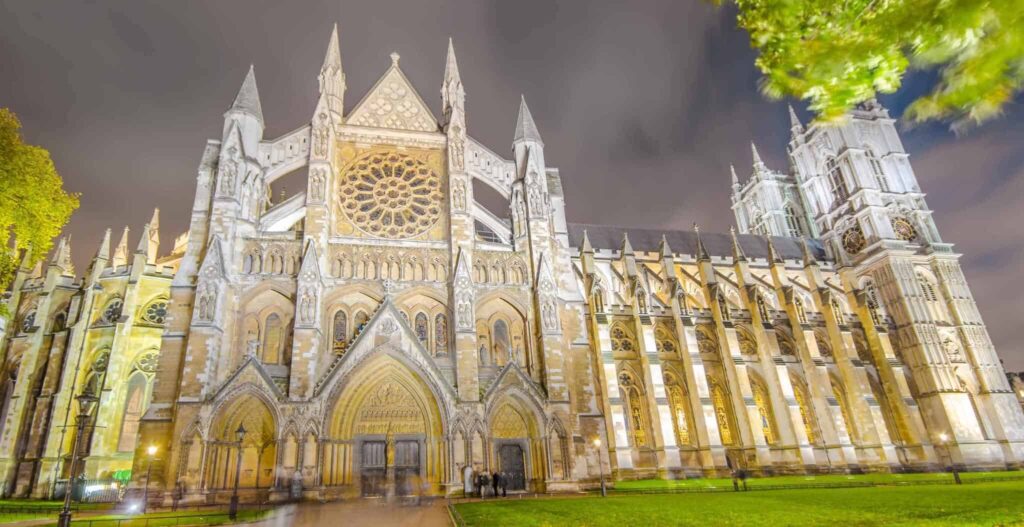
Westminster Abbey, though incorporating English Gothic elements, was profoundly influenced by Notre Dame and other French cathedrals. The use of ribbed vaulting, flying buttresses, and towering facades reveals this connection.
Westminster became the coronation church for English monarchs, just as Notre Dame played a central role in French state ceremonies. This demonstrates how the architectural model pioneered in Paris extended beyond religious functions, shaping national traditions across Europe.
Chartres Cathedral in France
Chartres Cathedral, located southwest of Paris, is often considered Notre Dame’s sibling in the Gothic tradition. Its stained-glass windows and sculpted portals reflect the same artistic language seen in Notre Dame, but with unique local adaptations.
Chartres also became a site of pilgrimage, reinforcing the idea that Gothic cathedrals were not just churches, but hubs of social, economic, and cultural life. Together, Notre Dame and Chartres symbolize the height of French medieval architecture.
Benefits of Gothic Architectural Technology
The architectural technologies perfected in Notre Dame Cathedral provided benefits that extended far beyond religious symbolism. Innovations like the flying buttress and pointed arch made it possible to build taller, lighter, and more durable structures. Another key benefit was the ability to create vast open interiors filled with light. This architectural openness fostered community gatherings, liturgical ceremonies, and public events, cementing cathedrals as centers of medieval civic life. The symbolic use of light through stained glass also influenced later design movements, from Renaissance architecture to modern minimalist design.
Use Cases of Notre Dame Cathedral Architecture in Modern Contexts
Notre Dame Cathedral’s architecture continues to inspire architects, engineers, and preservationists worldwide. Modern skyscrapers, though built with steel and concrete, use principles of verticality and light pioneered by Gothic cathedrals.
Another use case lies in restoration and conservation. The 2019 fire highlighted the importance of digital technology in architecture. These tools, rooted in the cathedral’s original architectural vision, demonstrate how medieval innovations and modern technology converge.
Finally, Notre Dame’s design remains a vital educational tool. Architectural schools across the world study its form to teach students about structural innovation, aesthetics, and the interplay of art and engineering. This ensures that the cathedral’s lessons endure even as construction methods evolve.
FAQ
What makes Notre Dame Cathedral’s architecture unique?
Notre Dame Cathedral stands out for its early and masterful use of Gothic innovations like flying buttresses, ribbed vaults, and rose windows. These features created a balance of structural stability, aesthetic beauty, and symbolic meaning that has influenced architecture for centuries.
How did the 2019 fire affect Notre Dame Cathedral?
The fire destroyed the cathedral’s spire and roof, but much of its facade, towers, and stained glass were preserved. Restoration efforts are underway using advanced digital technology and traditional craftsmanship to return it to its former glory.
Why is Notre Dame Cathedral considered a Gothic masterpiece?
It embodies the key elements of Gothic architecture: verticality, light, intricate decoration, and structural innovation. Its design not only transformed medieval Paris but also set a standard for Gothic cathedrals across Europe.