John Lautner: Architect Visionary Designs That Redefined Modern Architecture
John Lautner is widely recognized as one of the most innovative architects of the 20th century, whose creations pushed the boundaries of modern design. Known for blending futuristic forms with organic elements, Lautner crafted spaces that were not only visually striking but also deeply integrated with their environments.
Born in 1911 in Michigan, Lautner studied under Frank Lloyd Wright at the renowned Taliesin Fellowship. This experience shaped his philosophy of organic architecture, which emphasized harmony between human habitation and the natural world. Unlike many of his contemporaries, Lautner sought not only to design buildings but to create immersive environments that evoked emotion and challenged conventional ideas of domestic space.
His projects often combined concrete, steel, and glass with daring structural innovations. The results were homes and buildings that looked like something from another era, timeless, yet ahead of their time.
The Evolution of Lautner’s Career
John Lautner’s early career began with hands-on construction experience at Taliesin, where he learned to merge craft with vision. After moving to California in the 1930s, he became part of the burgeoning architectural scene that valued experimentation.
His designs from the 1940s and 1950s were characterized by bold structural moves and a focus on framing expansive views. As his career progressed, Lautner became more daring, using cutting-edge engineering to achieve floating platforms, massive cantilevers, and expansive glass walls that erased the boundary between indoors and outdoors.
By the 1960s and 1970s, his work had become iconic in popular culture. Several of his houses appeared in Hollywood films, representing futuristic lifestyles and luxury living. His approach to architecture has since influenced generations of architects and continues to inspire contemporary design.
Iconic Works of John Lautner
Chemosphere House (1960)

The Chemosphere House in Los Angeles is perhaps Lautner’s most famous creation. Built on a steep hillside, the home is perched on a single concrete column, resembling a spaceship hovering above the city. This design solved the engineering challenge of building on difficult terrain while also making a bold architectural statement.
Its octagonal shape, panoramic glass walls, and integration with its site embody Lautner’s futuristic vision. The house remains a landmark in Los Angeles and a symbol of mid-century modern innovation.
Elrod House (1968)
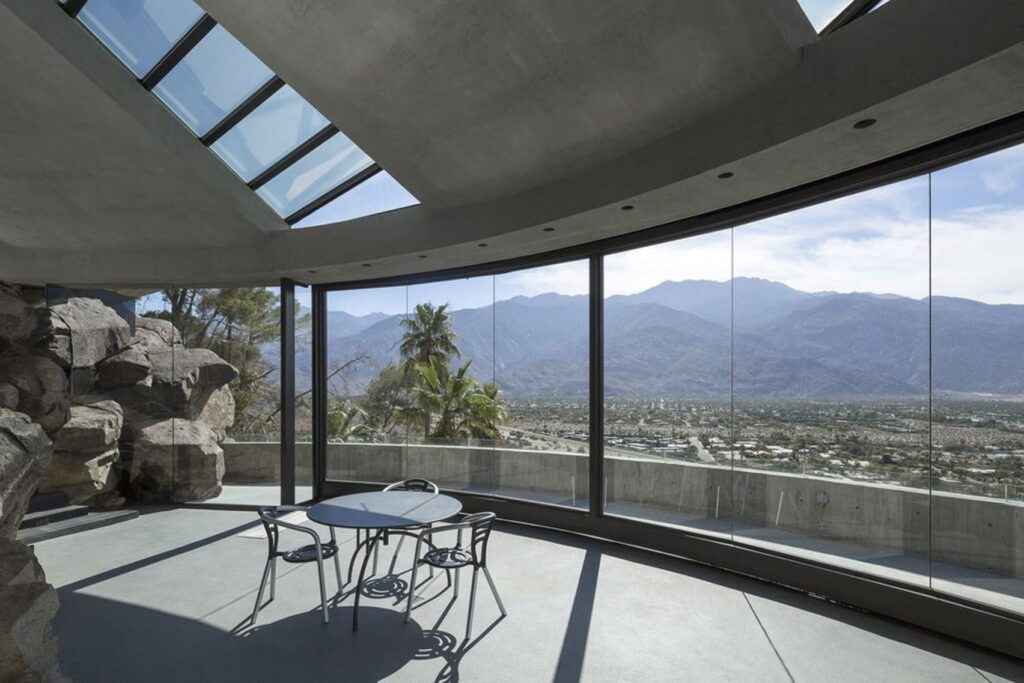
The Elrod House, located in Palm Springs, is another masterpiece of Lautner’s career. Known for its massive domed concrete roof with radial skylights, the house blends natural rock formations with modern materials. The interior features sliding glass walls that open to sweeping desert views, creating an almost seamless indoor-outdoor experience.
The Elrod House gained worldwide fame after being featured in the James Bond film Diamonds Are Forever, cementing its place in both architectural and pop culture history. It stands as a testament to Lautner’s ability to merge drama with functionality.
Sheats–Goldstein Residence (1963)
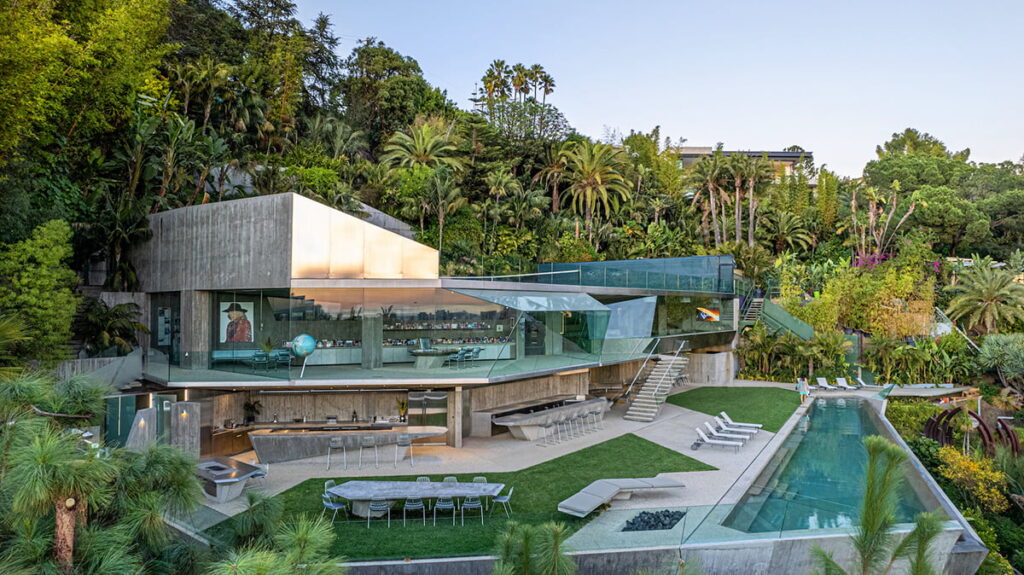
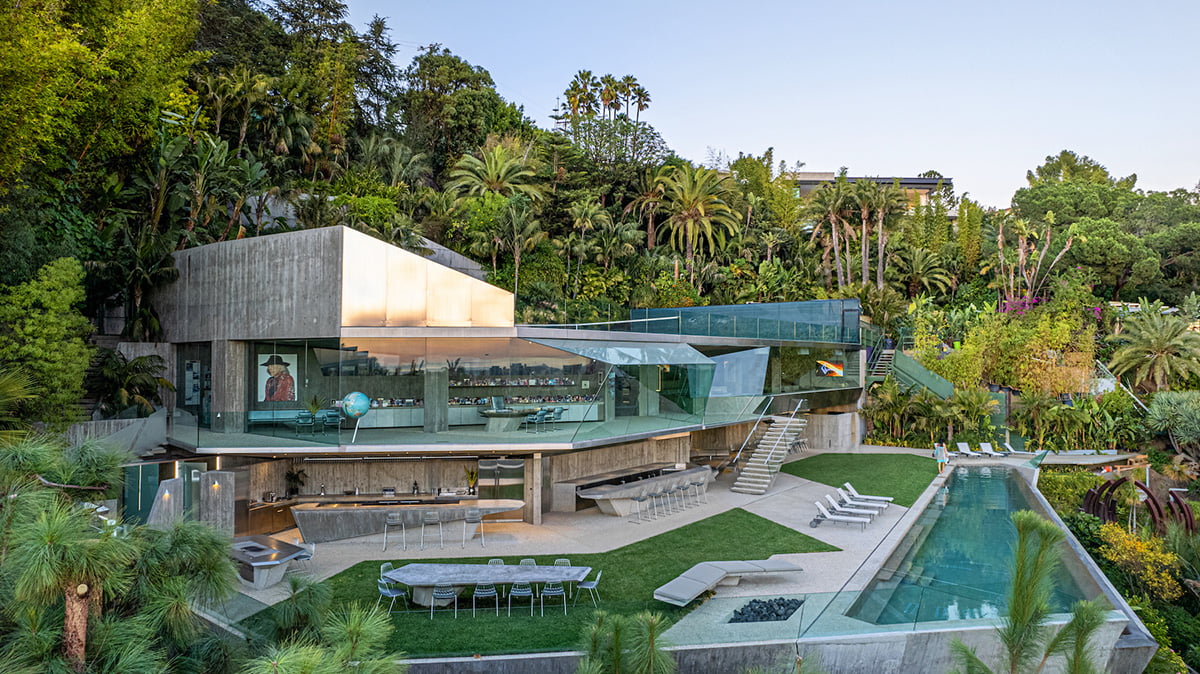
The Sheats–Goldstein Residence in Los Angeles exemplifies Lautner’s mastery of concrete and glass. Built into a hillside, the house features angular planes, skylights, and floor-to-ceiling glass walls that reveal panoramic city views.
This residence is not just a house but a living artwork. It has hosted countless cultural events, and its futuristic design continues to inspire filmmakers, artists, and architects. Its owner eventually donated the property to the Los Angeles County Museum of Art, ensuring its preservation for future generations.
The Arango Marbrisa House (1973)

One of Lautner’s international works, the Arango Marbrisa House in Acapulco, Mexico, demonstrates his ability to adapt his style to different contexts. The sprawling property overlooks the Pacific Ocean and features sweeping concrete forms and terraces that harmonize with the tropical landscape.
Its expansive pool and open design embody Lautner’s vision of luxurious, fluid living spaces where the boundaries between architecture and nature disappear. The house is still regarded as one of the finest examples of modern residential design in Latin America.
Benefits of John Lautner’s Architectural Approach
John Lautner’s architectural philosophy continues to offer valuable insights for today’s designers and homeowners. His focus on organic integration with the environment serves as a model for sustainable and site-sensitive building practices. By working with natural terrain instead of against it, Lautner’s homes minimize environmental impact while maximizing experiential value.
Another key benefit is his pioneering use of structural innovation. From daring cantilevers to floating platforms, his work demonstrates how technology can be harnessed to achieve visionary designs. Modern architects can draw inspiration from his experiments with concrete, steel, and glass to develop solutions that are both practical and aesthetically groundbreaking.
Use Cases and Real-Life Applications
Solving Challenging Terrains
Lautner’s Chemosphere House illustrates how architecture can respond to extreme site conditions. Instead of flattening a steep hillside, Lautner used innovative engineering to elevate the home on a central column. This approach is highly relevant today, where urban areas face land constraints and architects must design responsibly on difficult sites.
Creating Immersive Experiences
Homes like the Elrod House showcase Lautner’s ability to turn architecture into a sensory experience. By blending rock formations, concrete, and light, he created an immersive atmosphere that feels both futuristic and natural.
Designing for Sustainability
While Lautner may not have explicitly framed his work as sustainable, his emphasis on natural ventilation, light, and integration with surroundings offers valuable lessons for green building today. Modern architects can adapt these strategies to reduce reliance on artificial systems, lowering energy use and improving environmental performance.
Why John Lautner’s Work Remains Relevant Today
Even decades after their construction, Lautner’s houses still feel futuristic. This timeless quality stems from his focus on principles rather than trends: harmony with nature, bold structural expression, and an unyielding commitment to innovation.
In a world increasingly concerned with climate change, urban density, and technological integration, Lautner’s designs provide a blueprint for how architecture can be both visionary and responsive. His legacy challenges today’s architects to dream bigger while remaining grounded in context and human experience.
Frequently Asked Questions
1. What is John Lautner best known for?
John Lautner is best known for his futuristic and organic residential designs, such as the Chemosphere House, Elrod House, and Sheats–Goldstein Residence. His work is characterized by bold structural innovation, integration with natural environments, and dramatic architectural forms.
2. How did Frank Lloyd Wright influence John Lautner?
Lautner studied under Frank Lloyd Wright at Taliesin, where he learned the principles of organic architecture—designing in harmony with the natural environment. While Lautner developed his own distinct style, Wright’s influence is evident in his focus on site integration and spatial fluidity.
3. Why are Lautner’s houses considered iconic?
Lautner’s houses are considered iconic because they pushed the limits of design and engineering. They solved complex site challenges, embraced futuristic aesthetics, and often appeared in films and media. Their timeless innovation ensures their continued relevance and admiration worldwide.