Rietveld House: Architectural Innovation and Legacy of Modern Design
The Rietveld House, often associated with the renowned Rietveld Schröder House in Utrecht, is one of the most influential architectural achievements of the 20th century. Designed by Dutch architect Gerrit Rietveld in 1924 for Mrs. Truus Schröder-Schräder, the house is not only a UNESCO World Heritage Site but also a symbol of the De Stijl movement. Its design challenged traditional domestic architecture by introducing open-plan concepts, flexible spaces, and minimalist forms.
The Rietveld House has become a timeless case study in modern architecture, admired by architects, scholars, and enthusiasts worldwide. Beyond its visual appeal, the house introduced practical solutions to everyday living, emphasizing simplicity, functionality, and adaptability in domestic design.
The Historical Context of the Rietveld House
To understand the Rietveld House, it is crucial to place it within the cultural and artistic movement of its time. The early 20th century in Europe was characterized by rapid modernization and industrial growth, leading to new artistic expressions in architecture, painting, and design.
The De Stijl movement, founded in the Netherlands in 1917, advocated for abstraction and simplicity, focusing on geometric forms and primary colors. Gerrit Rietveld, deeply inspired by these ideas, sought to extend this philosophy into architectural practice. The Rietveld House became the movement’s most iconic three-dimensional representation, embodying straight lines, planes, and modular composition.
Architectural Design and Principles
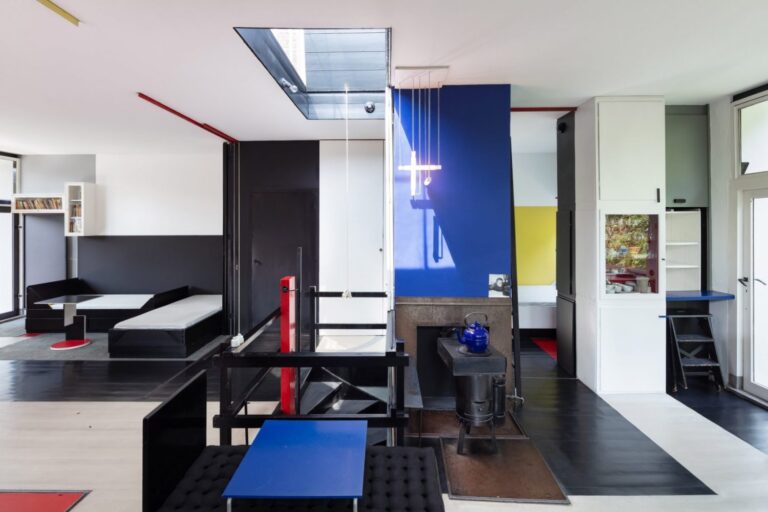
The design of the Rietveld House stands out for its radical departure from traditional architectural norms. Instead of fixed walls and compartmentalized rooms, Rietveld introduced sliding panels and movable partitions, allowing inhabitants to adapt the layout according to their needs.
The house is defined by its asymmetrical composition, use of intersecting planes, and the bold application of primary colors (red, yellow, blue) against a neutral palette of white, gray, and black. These elements created a sense of openness and visual dynamism that was revolutionary for its time.
The flat roof, cantilevered balconies, and open corners further emphasize its modernist character, proving that architecture could be both functional and artistic.
Real-World Examples and Applications of Rietveld’s Influence
Rietveld Schröder House in Utrecht
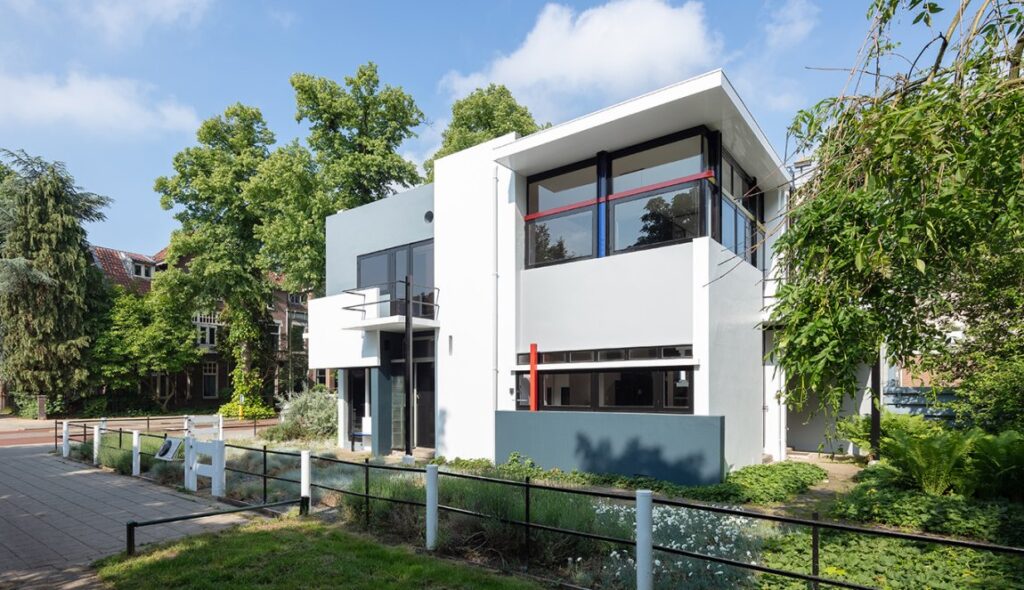
The most famous realization of Rietveld’s ideas, the Rietveld Schröder House, remains a living museum of modern architecture. Every aspect of the home, from its movable walls to its geometric furniture, demonstrates the practicality of flexible design.
The house’s adaptability allows it to serve both as a private residence and as a public museum, showing how early 20th-century architectural innovation still resonates in today’s world of multi-purpose spaces.
Rietveld’s Red and Blue Chair
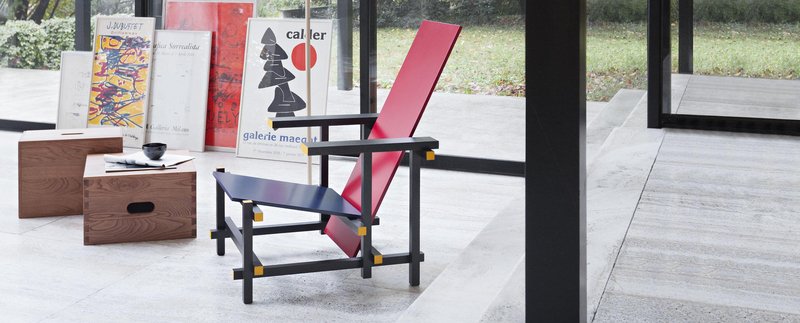
Although not a house, Rietveld’s Red and Blue Chair (1917) provides context for his architectural philosophy. The chair embodies the same principles seen in the Rietveld House: modular construction, geometric clarity, and color blocking.
This piece of furniture directly influenced the way interior spaces were conceived, blurring the line between furniture design and architectural structure. It highlights how Rietveld envisioned a holistic design approach that connected furniture, interiors, and architecture seamlessly.
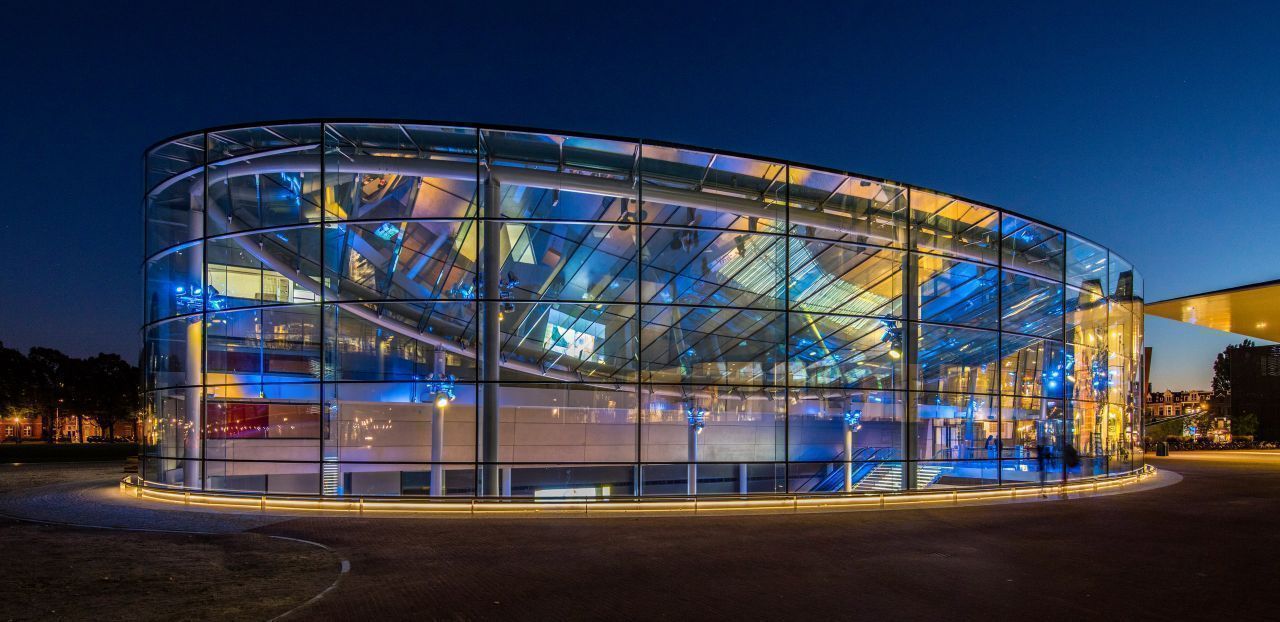
The Van Gogh Museum Wing in Amsterdam
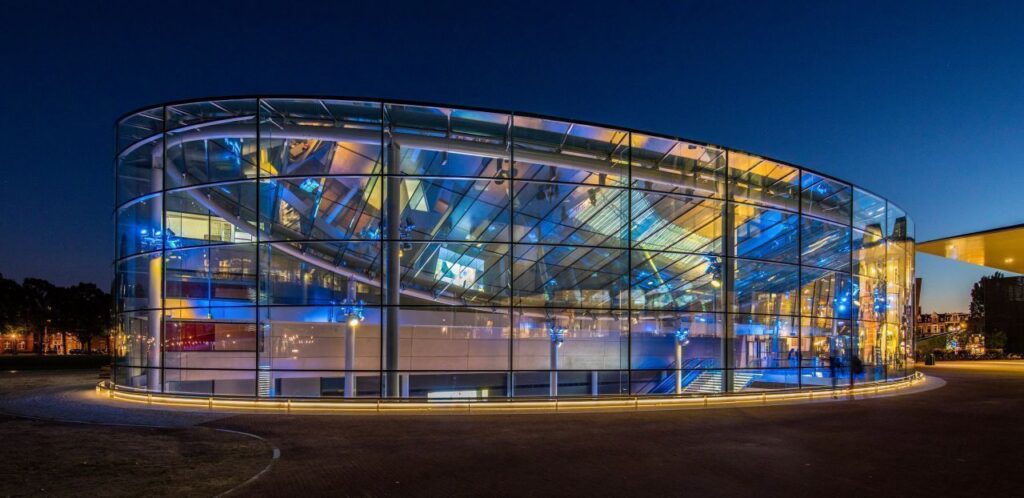
The influence of Rietveld extended beyond the Schröder House. In Amsterdam, the Van Gogh Museum Wing, designed by Gerrit Rietveld and later completed by others after his death, demonstrates his ability to balance modernist simplicity with functional design.
Although larger in scale, this project reveals how Rietveld’s architectural language adapted to public spaces while still maintaining the clarity and purity of the De Stijl aesthetic.
Example 4: Utrecht’s Modern Housing Concepts
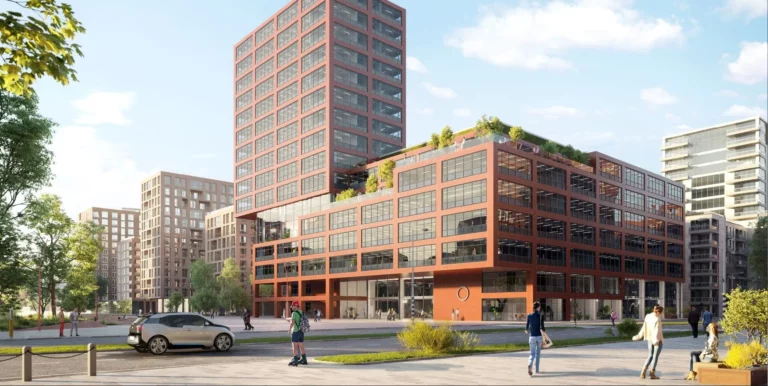
In Utrecht, Rietveld’s ideas inspired later housing projects that emphasize flexible living spaces and modular design. These homes, while more conventional than the Schröder House, draw from his principles of adaptability, clean lines, and integration of indoor and outdoor space.
Such examples show how his architectural philosophy was not confined to experimental structures but influenced the broader trajectory of modern housing design.
Benefits of Rietveld’s Architectural Approach
Rietveld’s work was not only about aesthetics but also about practicality and human experience. His architectural philosophy offers several key benefits:
- Flexibility in Living Spaces: Movable walls and partitions allowed residents to customize their environment, an idea highly relevant in today’s compact urban homes.
- Integration of Art and Life: By combining architecture, furniture, and interior design, Rietveld created holistic environments where functionality met beauty.
- Simplicity and Efficiency: His use of simple forms and modular construction emphasized efficiency without sacrificing elegance.
- Timeless Aesthetic Appeal: The geometric clarity and bold colors remain visually striking even a century later.
- Sustainability by Design: The emphasis on open space and minimal materials reflects sustainable thinking that aligns with contemporary eco-friendly architecture.
Use Cases in Modern Context
Flexible Urban Apartments
In dense cities where space is limited, the Rietveld House offers a model for multi-functional interiors. Movable panels and modular furniture allow apartments to transform from workspaces to living rooms seamlessly.
This approach solves the problem of limited square footage, giving residents the ability to maximize their environment without expanding their homes.
Educational Architecture
Schools and learning environments benefit from Rietveld-inspired design, where open layouts encourage collaboration and creativity. Movable partitions create classrooms that adapt to different teaching methods, fostering both group and individual learning experiences.
This adaptability addresses the challenge of evolving educational needs and the demand for dynamic spaces.
Museums and Cultural Spaces
Rietveld’s legacy also applies to cultural institutions, where flexible galleries and modular exhibition areas are essential. His architectural philosophy solves the challenge of curating diverse exhibitions while maintaining aesthetic coherence.
The Van Gogh Museum Wing, for instance, shows how minimal yet effective design enhances the visitor’s experience without overshadowing the art itself.
The Lasting Legacy of the Rietveld House
The Rietveld House is more than an architectural masterpiece; it is a manifesto of modern living and creative freedom. It demonstrated that homes could be adaptable, artistic, and sustainable at the same time.
Today, its legacy continues in modern architecture, interior design, and even urban planning. From minimalist homes to co-working spaces, the influence of Gerrit Rietveld’s vision is unmistakable. His integration of functionality, art, and human experience paved the way for a new way of living that continues to inspire generations.
Frequently Asked Questions
1. Why is the Rietveld House considered revolutionary?
The Rietveld House broke away from traditional architectural norms by introducing movable walls, open plans, and geometric abstraction. It represented a radical shift toward flexible, minimalist, and art-integrated living.
2. What is the connection between the Rietveld House and the De Stijl movement?
The house embodies the De Stijl philosophy of abstraction, simplicity, and harmony through its use of geometric forms, primary colors, and modular design. It remains the movement’s most iconic architectural representation.
3. How does the Rietveld House influence modern architecture today?
Its principles of flexible space, modularity, and integration of art with functionality continue to inspire contemporary architecture. From compact urban apartments to cultural buildings, Rietveld’s ideas remain highly relevant.