Modern Office Building Design: Innovation, Technology, and Real-World Examples
Modern office buildings are no longer just functional spaces; they have become symbols of innovation, sustainability, and corporate identity. The design of a modern office building incorporates cutting-edge architectural strategies, eco-friendly materials, and smart technologies that enhance productivity and comfort for workers.
Unlike traditional office spaces, modern office buildings often integrate open-plan layouts, flexible work zones, and advanced environmental systems. These elements create dynamic environments that cater to evolving professional needs while also reflecting an organization’s brand values. The shift toward modern office design has been accelerated by global trends such as remote working, green architecture, and the increasing demand for wellness-focused spaces.
Key Characteristics of Modern Office Buildings
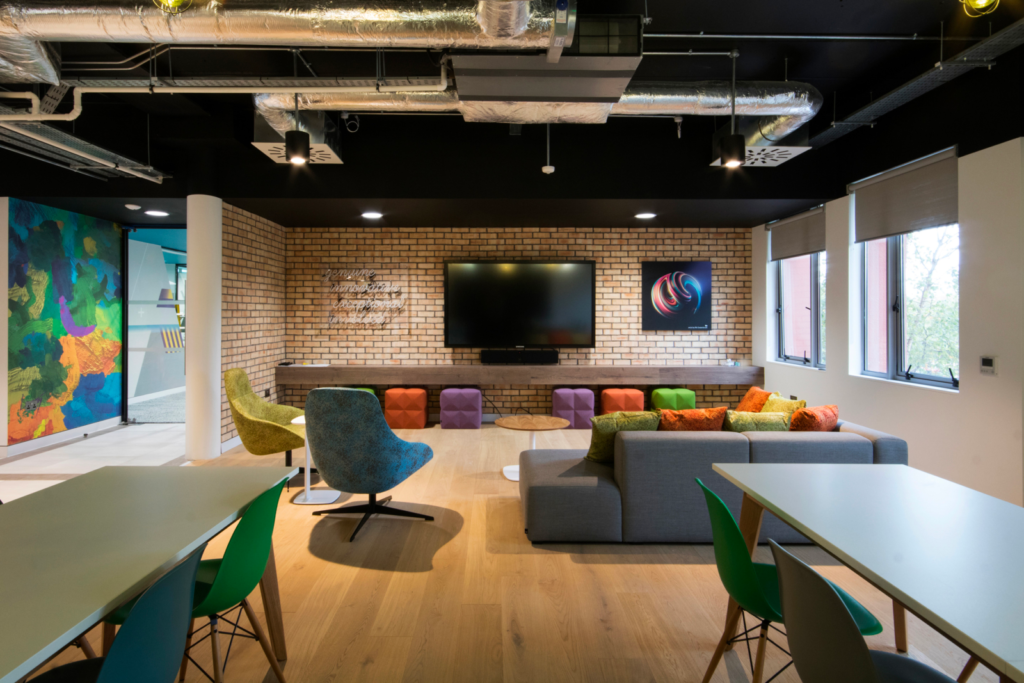
Modern office buildings share several defining features that distinguish them from older architectural models. First, they prioritize sustainability, often incorporating solar panels, green roofs, and energy-efficient HVAC systems. This commitment to environmental responsibility reduces operational costs while contributing to a healthier planet.
Another hallmark is flexibility. Modern office layouts often include collaborative workspaces, quiet zones, and adaptable furniture. These elements allow employees to choose work environments suited to their tasks, boosting both productivity and job satisfaction. Furthermore, modern office design emphasizes natural lighting, biophilic design elements, and wellness amenities such as fitness centers or relaxation areas, creating spaces that nurture creativity and well-being.
The Role of Technology in Modern Office Buildings
Technology is at the heart of modern office building innovation. Smart systems monitor and regulate lighting, heating, and security to optimize efficiency and comfort. Building automation systems can even adjust environments based on occupancy, ensuring resources are used responsibly.
Another technological advancement is the integration of digital collaboration tools and high-speed connectivity throughout the workspace. This ensures employees can seamlessly communicate whether they are in a meeting room, a coworking space, or working remotely. Virtual reality, AI-driven analytics, and IoT-enabled devices are increasingly shaping how modern offices function, turning them into intelligent ecosystems.
Real-World Examples of Modern Office Buildings
The Edge, Amsterdam
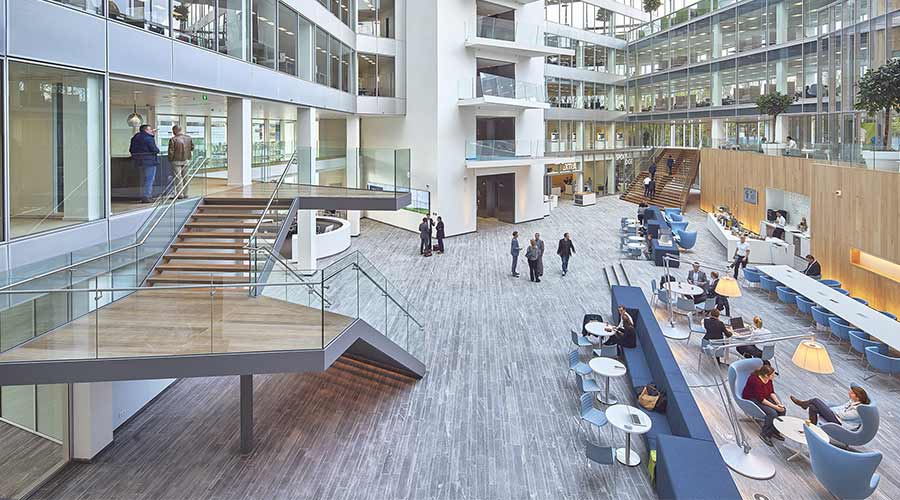
The Edge in Amsterdam is considered one of the most sustainable and technologically advanced office buildings in the world. It is known for its extensive use of smart technology, with sensors embedded throughout the structure to monitor energy use, lighting, and even workspace occupancy.
Beyond its green credentials, The Edge emphasizes employee well-being by incorporating abundant natural light, collaborative spaces, and wellness facilities. This building sets the standard for combining environmental responsibility with cutting-edge innovation.
Apple Park, Cupertino
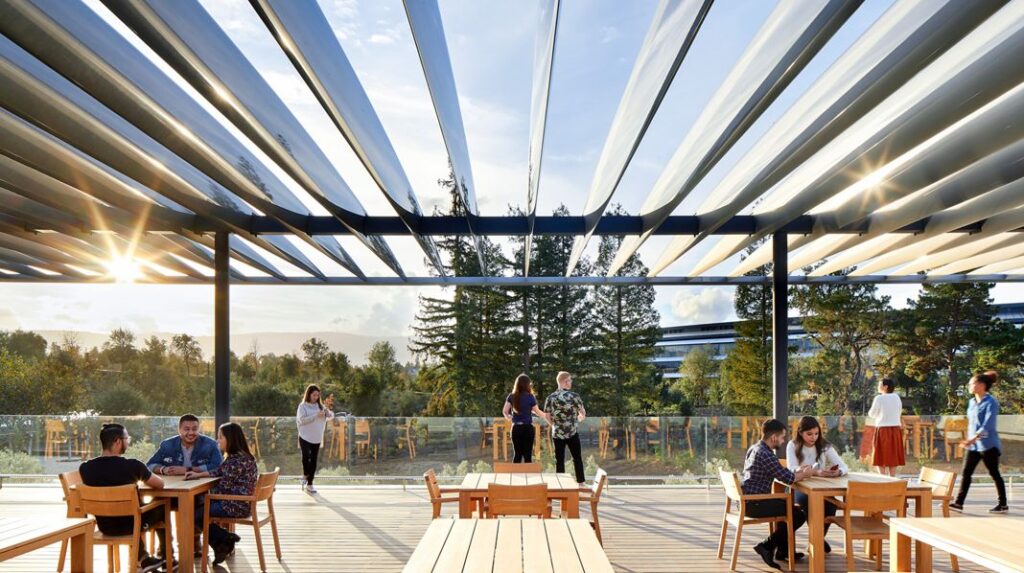
Apple Park, the headquarters of Apple, is a futuristic example of a modern office building. Designed as a massive ring-shaped structure, it integrates state-of-the-art energy systems, green spaces, and an emphasis on natural ventilation. Its design reflects Apple’s identity as a leader in technology and creativity.
The building’s flexible office spaces, innovation labs, and open-plan layouts allow for seamless collaboration among employees. At the same time, the extensive use of glass ensures transparency and fosters a connection between indoor workspaces and the surrounding landscape.
The Crystal, London
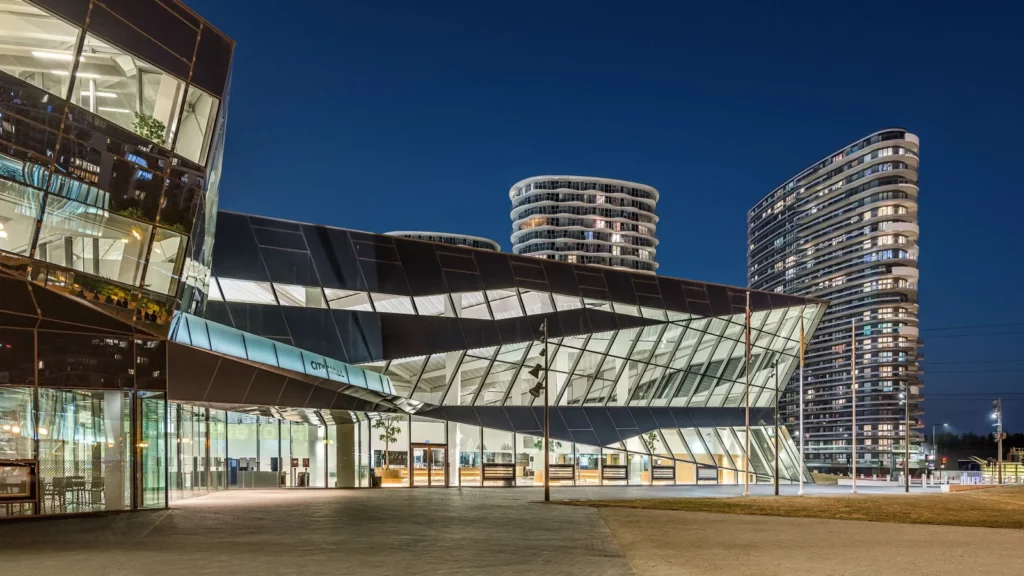
The Crystal in London is a global showcase for sustainable design in office architecture. It runs on renewable energy and incorporates rainwater harvesting, solar panels, and advanced lighting systems. The building is a powerful demonstration of how corporate spaces can prioritize sustainability while remaining functional and visually impressive.
As a public exhibition space and office, The Crystal has influenced architects and developers worldwide, showing how modern office buildings can achieve both ecological responsibility and architectural beauty.
Salesforce Tower, San Francisco
Salesforce Tower is another prime example of a modern office building. With its sleek glass exterior and advanced technology, it embodies the ideals of connectivity, sustainability, and employee-centered design. The building includes communal spaces, digital infrastructure, and environmental systems that minimize carbon emissions.
Its sky lounges, open offices, and innovative collaboration areas support a culture of creativity while fostering connections between employees and the city. Salesforce Tower highlights how technology and design merge to redefine modern office environments.
Benefits of Modern Office Building Design
Modern office buildings offer a wide range of benefits beyond aesthetics. One of the most significant advantages is improved employee well-being. Natural lighting, biophilic design, and wellness amenities reduce stress, enhance focus, and contribute to a healthier work environment.
Another key benefit is energy efficiency. By incorporating renewable energy sources, advanced HVAC systems, and smart technology, modern offices reduce their ecological footprint while lowering operational expenses. Flexible office spaces also enable better utilization of resources, making them adaptable to changing business needs.
Moreover, modern office designs help companies attract and retain top talent. Employees increasingly value work environments that support collaboration, creativity, and wellness, and businesses that invest in these features stand out as employers of choice.
Use Cases of Modern Office Buildings
Modern office buildings solve several challenges faced by businesses today. For example, in cities with high real estate costs, flexible layouts maximize space efficiency without compromising comfort. Open-plan and modular workstations allow companies to scale their teams without requiring frequent renovations.
In addition, companies facing sustainability goals can rely on modern office building features to meet environmental regulations and corporate social responsibility targets. Green certifications such as LEED or BREEAM often stem from the integration of renewable energy, water conservation, and eco-friendly materials in office buildings.
Modern office buildings also serve as strategic tools for branding. A well-designed headquarters communicates innovation, responsibility, and forward-thinking values to clients, partners, and employees alike. As such, architecture becomes a silent but powerful form of corporate communication.
Frequently Asked Questions
What makes an office building modern?
A modern office building is defined by its integration of technology, sustainable design practices, flexible layouts, and employee-centered features. Unlike traditional offices, modern buildings focus on innovation, efficiency, and well-being.
Are modern office buildings more expensive to build?
While the initial investment in modern office building design may be higher due to advanced materials and technologies, long-term savings from energy efficiency, lower maintenance, and improved employee productivity often offset these costs.
How do modern office buildings impact employee performance?
Modern office buildings positively impact performance by providing natural light, adaptable workspaces, wellness features, and advanced digital infrastructure. These factors enhance productivity, creativity, and overall job satisfaction.